
留言
如果您对我们的产品感兴趣并想了解更多详情,请在此留言,我们会尽快回复您。



A telecom rectifier turns AC grid power into regulated DC power for telecom equipment. This device powers radio equipment continuously and charges backup batteries, so service survives grid outages. Reliable 48V DC power systems form the foundation of that uptime. A telecom rectifier sits at the heart of every base station power chain, and its behavior shapes overall reliability. Why does 48V dominate, how does the system work, and which features guarantee reliability? This article answers those questions in order. You will see why 48V is the standard, how power flows from the grid to the load, and which design features keep base stations alive.
A telecom rectifier converts AC power into stable 48V DC power for base stations.
The 48V standard reduces power loss and keeps equipment safe and compatible.
N+1 redundancy adds an extra rectifier module to prevent outages if one fails.
Battery backup provides power during grid outages, and 5G sites need larger batteries.
Modular rectifier systems let you add capacity easily as your site grows.
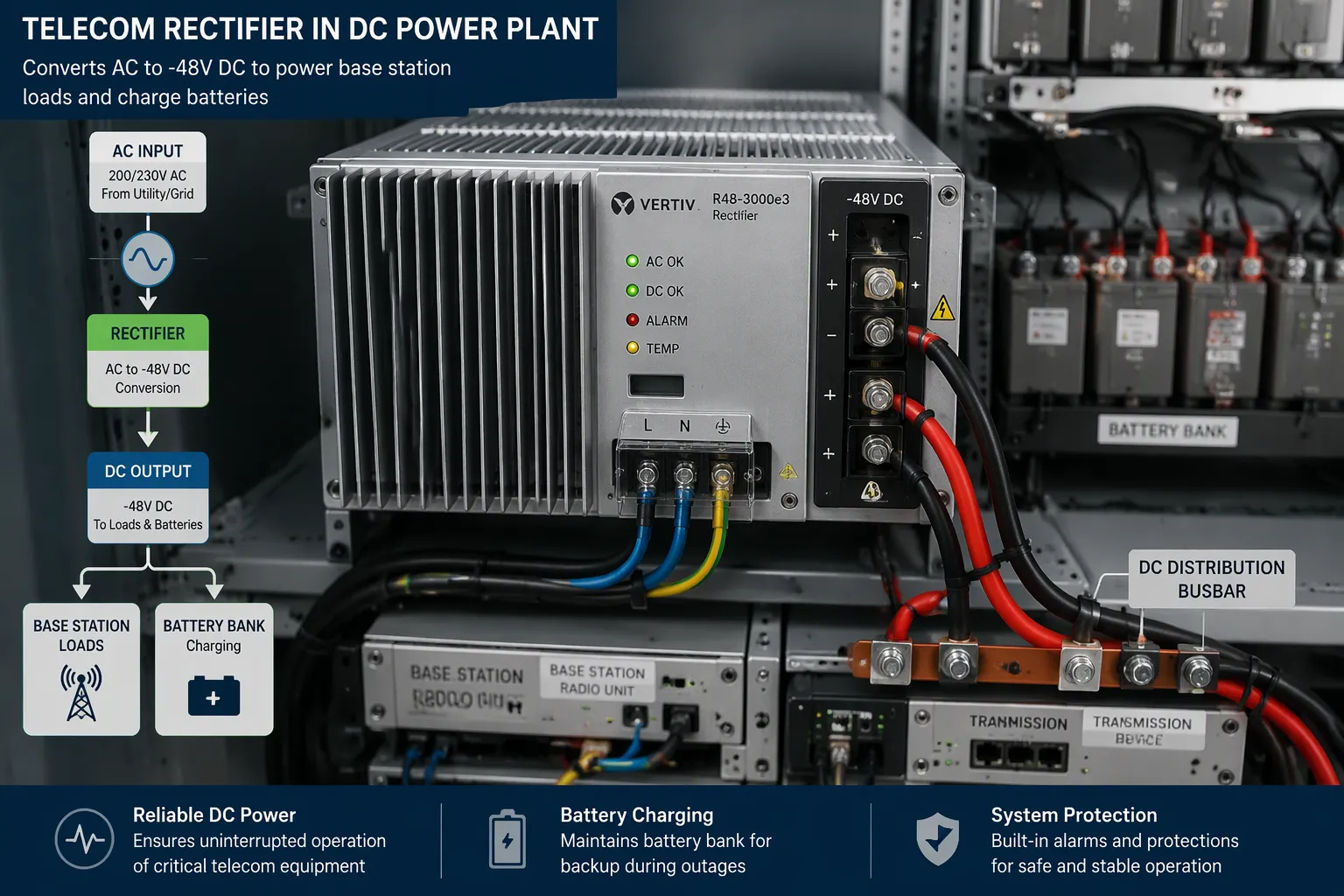
A telecom rectifier is the heart of the telecom DC plant. It takes AC mains from the grid and converts it into a regulated -48V bus. Every radio unit, transmission device, and control board in a base station draws its operating power from that bus. Without a steady DC output, the site goes dark the moment the grid wobbles.
The conversion happens in stages, and each stage has a clear job. First, the bridge stage rectifies the incoming AC into pulsating DC. This is the starting point of the whole chain. Next, a power factor correction stage shapes the input current so the site draws power efficiently from the grid. The third stage switches the corrected DC at high frequency through a transformer, which provides isolation and steps the voltage toward the target level. Finally, an output filter smooths the result into a clean, regulated -48V bus.
You can think of the rectifier as a modular building block. Each module handles a share of the total load, and the plant adds or removes modules as demand changes. This modular design keeps the conversion process manageable and lets the plant scale with the site.
A telecom rectifier does two jobs at once. It supplies continuous power to the telecom loads, and it charges the battery bank in parallel. The loads always see the bus voltage, and the batteries sit connected to that same bus. When the grid is healthy, the rectifier carries the load and tops up the batteries. When the grid fails, the batteries take over without any switching delay.
This dual role shapes how you size the plant. The rectifier capacity must cover the live load plus the battery recharge current. A plant sized only for the load will struggle to recharge batteries after an outage. A plant sized for both keeps the site ready for the next event.
The rectifier also protects the batteries from overcharge. It regulates the bus voltage to a level that keeps the batteries float-charged without stressing them. That regulation is what turns a simple AC-to-DC converter into a reliable telecom rectifier.
Voltage drop drives the first technical argument. Current flowing through a cable loses energy along the run, and that loss grows with the current. A higher bus voltage delivers the same power with less current, so the drop along long feeder runs stays small. Base stations often place rectifiers far from the antennas, and 48V keeps the delivered voltage close to the source value.
Battery chemistry reinforces the choice. A string of lead-acid cells fits neatly into the 48V range, and each cell operates at a voltage that supports long float life. You get a battery bank that matches the bus without complex conversion between the two.
Safety rounds out the technical case. 48V sits below the thresholds where contact becomes dangerous in normal dry conditions, so technicians can work on the bus with standard precautions. Higher distribution voltages would demand stricter isolation and more protective gear at every site.
Legacy standards anchor 48V in place. Early telecom networks settled on this bus voltage, and generations of equipment followed that decision. Central offices, outside plants, and radio sites all inherited the same nominal level, which created a shared expectation across the industry.
The ecosystem then reinforced the standard. Rectifier makers, battery suppliers, and radio vendors all design around 48V, so a new site can draw from a deep pool of compatible parts. You gain choice and competitive pricing from that breadth. A shift to another voltage would strand existing equipment and force every vendor to redesign in step. That coordination cost explains why 48V remains the default for base station power.
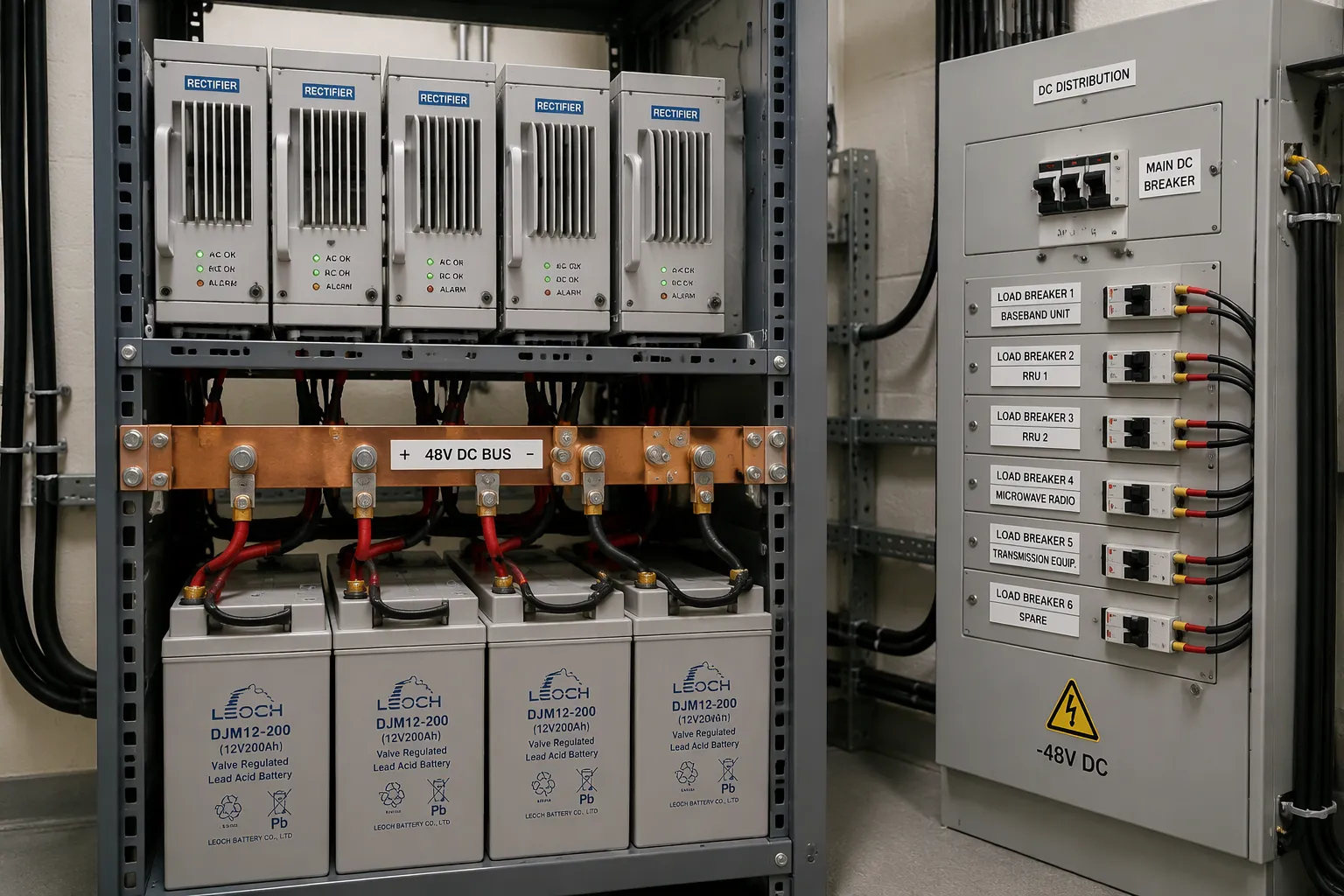
Picture the DC plant as a shared power spine. Rectifier modules plug into a common shelf, and each module feeds the same -48V bus. The bus is a copper bar or cable run that every load taps into. The battery bank connects directly to that bus, not through a separate charger. This direct connection matters. The batteries sit at the same voltage as the loads, so they discharge the instant the bus voltage sags.
The modules share the load in parallel. Each one contributes current according to its capacity, and the plant controller balances the output across the group. You can add a module to raise capacity or pull one for service without touching the bus. That plug-in structure is what makes a telecom rectifier plant scalable. A small site might run two modules, while a heavy site runs many more in the same shelf.
The path from grid to load follows a clear sequence:
AC mains enter the plant through an input panel and reach each rectifier module.
Each module converts the AC into regulated -48V DC and pushes it onto the bus.
The bus carries DC to the distribution panel, which splits power across load breakers for radios, transmission gear, and controllers.
The battery bank floats on the bus, drawing charge current while the grid is healthy and supplying current when it fails.
An embedded sub-rack packs this whole chain into a compact frame. A 24kW 450A embedded DC power system fits the rectifier shelf, distribution, and control into a 19-inch rack, which suits sites with limited floor space. You mount it, wire the AC input and the battery string, and the plant is ready to carry load.
During normal operation, the rectifier modules hold the bus at float voltage. The batteries draw a small current and stay topped up. When the grid drops, the bus voltage falls slightly, and the batteries pick up the load with no transfer switch involved. The modules restart when AC returns, and they recharge the batteries while carrying the site load. That recharge current adds to the load, so plant sizing must account for both at once. A plant with spare module capacity recovers faster after an outage.
N+1 redundancy means the plant carries one more rectifier module than the load requires. If the site needs three modules to supply its load and charge current, you install four. Each module runs below its full rating, and the spare capacity sits ready. When one module fails, the remaining modules pick up the extra current without a break in service. The bus voltage holds steady, and the radios never notice the event.
This design changes how you plan maintenance. You can pull a failed module and replace it while the site stays live, because the plant still has full coverage from the remaining units. The controller flags the fault and shifts the load automatically. You gain a maintenance window without a site visit at night and without a service interruption. That margin is the difference between a plant that survives a fault and one that drops the site.
Battery runtime depends on three factors: the load the site draws, the capacity of the battery bank, and the age and temperature of the cells. A larger bank buys more minutes, and cooler cells hold their capacity longer. You size the bank against the outage duration you expect and the load you must carry.
5G raises that load sharply. A single 5G base station consumes two to three times the energy of its 4G predecessor, so the same battery bank now delivers a shorter runtime. Sites that upgraded radios without resizing the bank can fall short during a long outage. Check the load figure before you finalize battery capacity.
Protection completes the uptime picture. Surge protective devices on power, signal, and antenna feeder lines divert transient energy away from radio and telecom equipment. A strike on the feeder line can destroy a radio unit in an instant, and the SPD absorbs that energy before it reaches the hardware.
A telecom rectifier converts AC grid power into a stable 48V DC bus. Redundancy and battery backup turn that bus into a lifeline for base stations.
The chain stays simple. Grid input feeds the rectifier, the rectifier holds the -48V bus, distribution splits power to the loads, and the battery bank floats on that same bus. Each link supports the next.
A modular 48Vdc 75A/150A power supply system shows how that architecture scales in practice. As networks evolve, 48V remains the backbone of base station power.
A rectifier converts AC into DC. An inverter does the opposite and turns DC into AC. A base station needs both functions in different places, but the rectifier carries the main job of feeding the -48V bus and charging the batteries.
The negative bus convention comes from early telecom practice and limits corrosion on buried cable runs. Equipment designers built around that convention, so the ecosystem standardized on it. You connect the positive terminal to ground and treat the live conductor as -48V.
Add the live load to the battery recharge current, then add one spare module for N+1 redundancy. A plant sized only for the load will recharge batteries slowly after an outage. Check the load figure before you finalize capacity.
Runtime depends on the load, the battery capacity, and cell age and temperature. A 5G site draws two to three times the energy of its 4G predecessor, so the same bank delivers a shorter runtime. Size the bank against your expected outage.
Yes. Rectifier modules share the bus in parallel, so you add a module to raise capacity without replacing the shelf. That plug-in structure lets a small site grow into a heavy site on the same platform.
留言
Scan to Wechat :

Scan to WhatsApp :